Transit safety is absolutely vital to us. Fully understanding how and when to traverse the railroads in a safe and effective way is crucial, and while trains and their tracks are immensely beneficial and essential to our daily lives, there are indeed many hazards present if particular regulations are not properly observed. Either if it’s simply parents who are traveling with playful kids or vehicles nearing level crossings, people should all be conscious of the hazards and aware of what is necessary to guarantee the well-being of all concerned.
There is indeed a justifiable purpose for emphasis on safe operation. Research shows that in the United states, an individual or automobile is impacted by a train approximately every three hours. Approximately 900 fatalities take place each year in the United states at railroad crossings. In 2011, there were 1,956 confirmed railway accidents in the U.S.
On a more friendly note, the children’s book “Katie and Kenny Tour the Railroad” by renown author Keith N. Corman takes a more light-hearted and engaging route in educating young school children about the importance and significance of railroad safety through a visually stimulating and exciting blend of storytelling and illustration.
Catching the subway is often times a key component of the lives of millions of people every day, so we could all benefit from realizing and understanding the potential risks to be on the lookout for in order to properly ensure that we prevent any tragedies or unneeded losses of life due to carelessness or ignorance.
Trains are thrilling and enjoyable for a variety of reasons: due to their immense size, extremely fast pace, and uniquely loud sounds. But train tracks and train crossings can also be very hazardous too. Here are some extremely vital train and railroad safety measures to assist in keeping you and your family safe near and on the railroads at all times.
- You can’t always predict when a train will cross at a crossing.
Most people give almost no heed to the road-railway intersections where they pass day after day since they never notice a train passing through there. They don’t understand that trains do not really operate on fixed schedules and can be speeding anywhere in any direction at any moment.

At all the crossings, and in particular those that you are most familiar with, it’s highly important to always anticipate the coming of a train. They usually cross the railway-highway intersection right when you least expect them to.
- If you’re a pedestrian, be extra careful- your life could depend on it.
Railway tracks are mostly utilized by runners, cyclists, individuals walking their dogs or as a place to ride bikes or other vehicles, plus a broad range of other things. What’s the risk here? These individuals are all focusing on their own activities instead of the possibility of an oncoming train speeding their way. For example, a lot of joggers run with their headphones and never hear the engineer’s alert. The blaring sound of motorized engines often cover the horn of an incoming train.
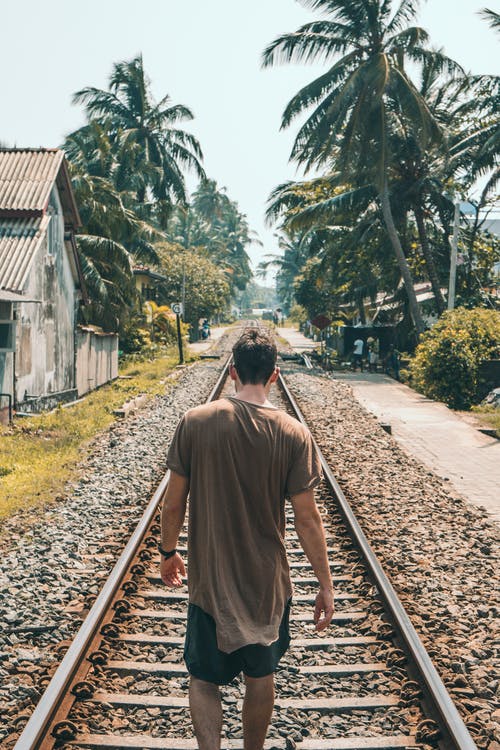
A lot of people who hear the warning struggle to flee the risk of harm. A great deal of them are wrong to think that the train can slow down for them. Some people think that the train approaching from behind them is on the other track (like cars driving on the right side of the road), and sometimes this could potentially lead to devastating or even fatal accidents that could have been so easily preventable.
- Tunnels and bridges are no exception to potential hazard.
Railway bridges frequently seem like a quick way to get to a popular fishing or hunting spot. These do not always appear to be hazardous when one is simply standing there when there’s no train in sight.

Apart from being blatantly unlawful, once you are up there and find yourself faced with an incoming train, you immediately have just two choice- either jump off as fast as you physically can, or take your chances trying to survive a full on collision with a high speed train coming straight at you.
Obviously, we can’t outrun because there’s no pavement or walkway (also because of our human limitations)- just hollow gaps between connections to lock your legs. Even if there’s a maintenance walkway, it most likely is not a sufficiently safe distance away from the rails to keep you from being impacted by the train.
- Even if there isn’t one, always expect another train to cross immediately after the first one does
If you are at an intersection with more than a single railroad track, then it’s definitely not advisable to try to cross right after the back end of the train passes by. There could be another train speeding down the other track. Many intersection deaths are triggered by impatience or lack of awareness at multiple-track crossings.

You’ll very often recognize how many tracks there are at any given crossing by observing the iconic “crossbuck” (which is a white X-shaped sign with black letters that spell the “railroad crossing”). Immediately underneath the crossbuck is an indication that confirms the number of tracks present if there are various different tracks at the crossroads. Crossbuck is also a legislative sign that implies the right-of – way to the train.
- Understand, identify, and heed the railroad warning signs
Sometimes (if not most of the time), intersections are accessorized with fully automated alarm systems, such as blinking lights, sirens, and gates that activate whenever a train is nearing. They are active warning devices. other crossings have only passive danger signs to notify you of potential threats ahead of time. These include the “advance warning sign” (a distinctly round, yellow, black “X” and black “R-R”) and the “pavement marking” (a large “X” and “R-R” painted on the road).

Surprisingly, more than half of all crashes occur at intersections that equipped with automatic signals. This just proves that not enough people understand or take into consideration the warning signs that were implemented to prevent just that. Keep a look out for the signs and research their meanings ahead of time to be extra safe and knowledgeable.
- Avoid miscalculating and mistakenly crashing into a passing train- it’s more common than you think
In 25% of all documented railroad intersection accidents, it has been observed that the vehicles actually collided head-on into the side of a passing train.
Most of the time, it’s due to the driver going too fast during unsafe weather conditions like blackness, stormy weather, or mist. Many drivers “outdrive their own headlights.” This involves speeding too quickly to be able to brake at the field of view illuminated by the car’s headlights. When you see the train at the intersection, it’s usually too late to prevent a collision. In a variety of circumstances, there could be a high degree of commotion and distraction happening in the vehicle (blasting music on the speakers, intoxication, having conversations, etc.) which may cause the driver to be unobservant and to not hear the railroad warning sirens. Always prioritize being attentive and listen when you see the hazards signs that indicate that there’s an upcoming highway-rail crossing further down the road.

Being wise and attentive near train tracks usually means the difference between life and death. Stay alert!
 Trina’s Travel